
Self Reliance

The Self-Reliance Project aims to empower smallholder households in Malawi to achieve food and income security. It focuses on training, resource provision, and support for sustainable agricultural practices. This project trains families using two approaches: residential one-year long training, and community-based training. In addition to the training, beneficiaries are also provided with farm inputs and receive regular extension support.
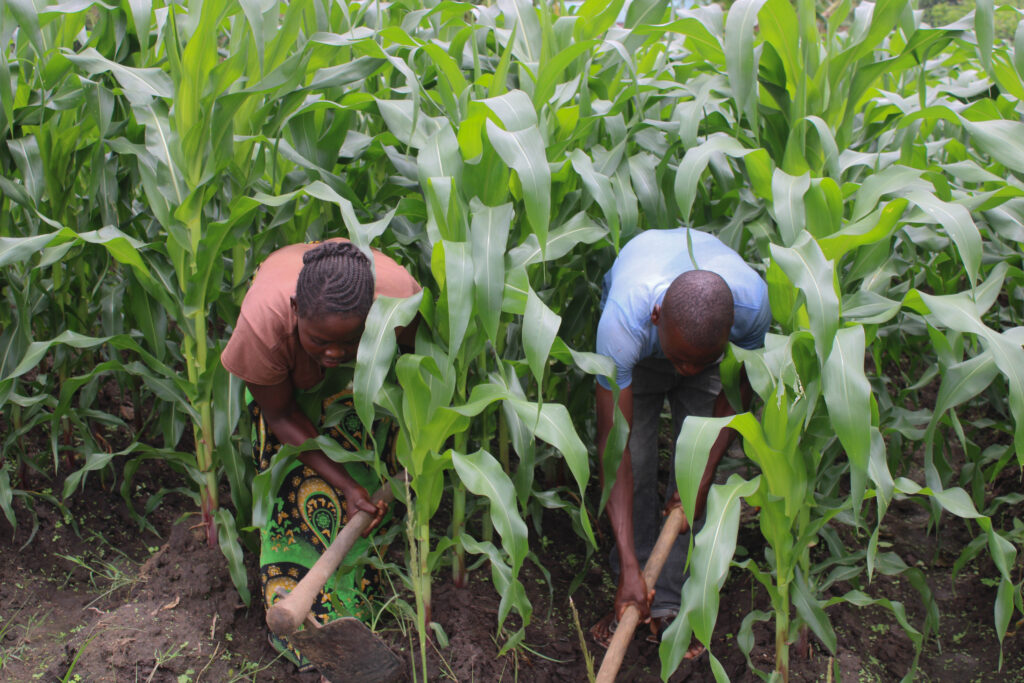
Interventions:
- Agriculture Training:
- Comprehensive training on sustainable farming methods, including land productivity, climate-smart practices, and livestock management.
- Focus on modern crop techniques, emphasizing maize, legumes, tubers, and small livestock such as pigs and chickens.
- Nutrition Education
- A dedicated nutrition module in the training curriculum is used, covering dietary diversification, food processing, and preventing malnutrition.
- Promote the production of nutrient-dense crops and safe food preparation practices.
- Natural Resource Management:
- Implementation of community afforestation initiatives, including planting tree seedlings to enhance environmental stewardship.
- Training on sustainable natural resource use and management.
- WASH
- Training on sanitation and hygiene practices, including the establishment of handwashing stations and proper sanitation facilities.
- Supports communities in accessing clean water through the drilling of boreholes.
- Women Empowerment & Gender Equality
- SAFI actively promotes women empowerment and gender equality through various initiatives, including conducting training sessions with families. These sessions focus on raising awareness and understanding of gender balance, women’s empowerment, and youth empowerment. Participants learn about the importance of gender equality, women’s rights, and the benefits of empowering women and youth within their communities. By providing knowledge, skills, and resources, SAFI aims to foster an environment where women and youth can actively participate, contribute, and thrive, ultimately creating a more inclusive and equitable society.
• Over 100% increase in maize yields by program beneficiaries
• Yield for soy bean and groundnuts increased by 30-50%
• 261 boreholes drilled across the impact areas since 2018